Nutrition

Nourish to Flourish: The Power of Balanced Nutrition

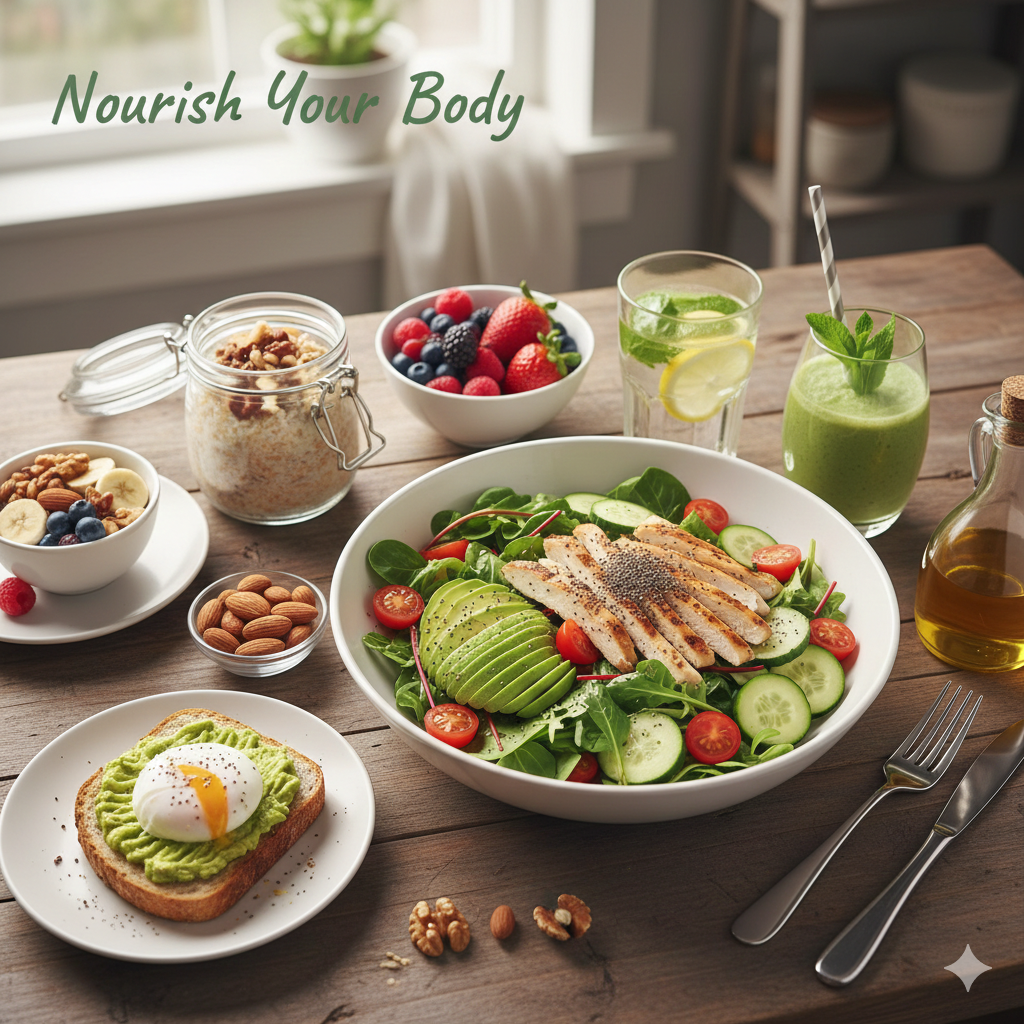
Nutrition Image

🥗 Nutrition, What Is Nutrition, Types, Importance & Healthy Foods

Understanding Nutrition: Fueling Life 🍎

Nutrition is the foundation of good health. From energy to growth to immunity—your body needs the right nutrients to function properly. In today’s fast lifestyle, most people eat food but don’t get nutrition, which leads to weakness, low stamina, and long-term diseases.

This blog explains what nutrition is, types of nutrition, why it is important, and the best healthy nutritious foods you should eat every day.

What is Nutrition?

Nutrition refers to the process of consuming food and using nutrients from it for:

  • Energy
  •  Body growth
  •  Repair of damaged tissues
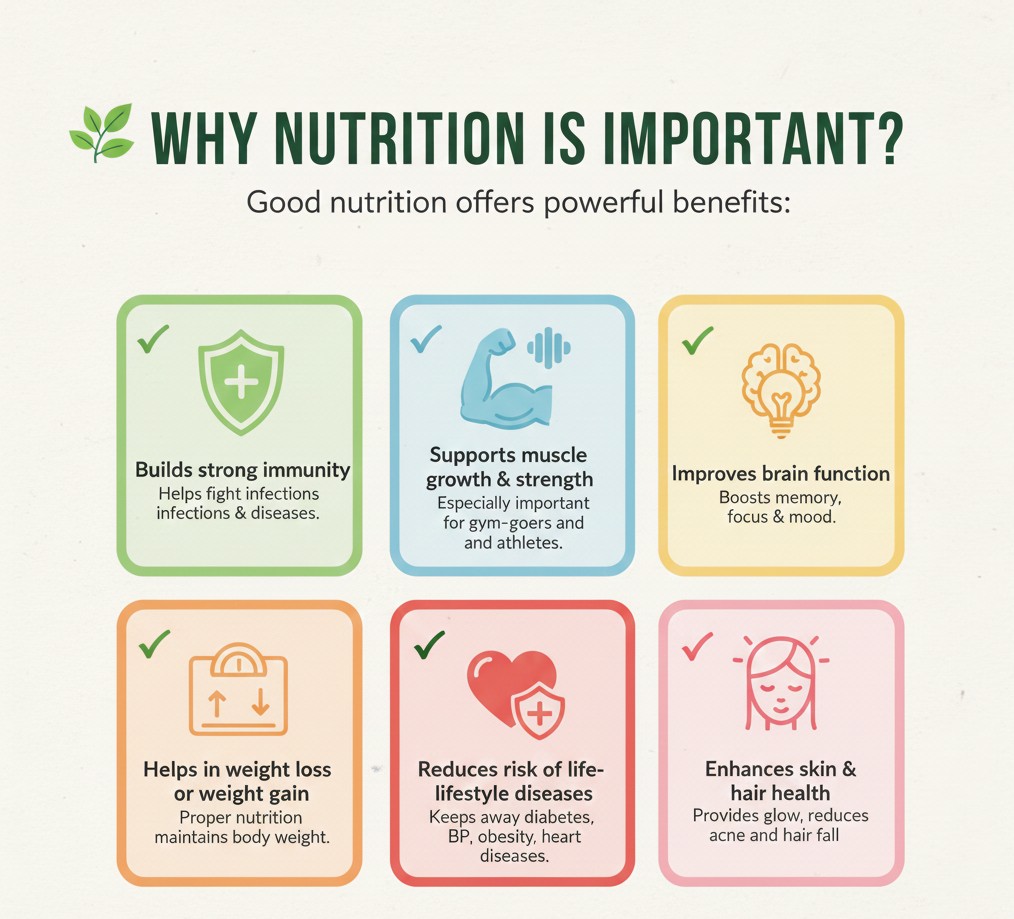
  •  Boosting immunity
  •  Maintaining overall health

Good nutrition = Healthy body + Strong immunity + Longer life.

  Starting your fitness journey is exciting, but training alone won’t cut it. Your results—whether it’s weight loss, muscle gain, or increased energy—are 80% nutrition. This guide breaks down the essentials for beginners.

🥗 Types of Nutrition

There are mainly two types of nutrition:

1. Macronutrients

Macronutrients are nutrients your body needs in large amounts.

They provide energy (calories).

 a) Carbohydrates

Primary source of energy.
Examples: Rice, roti, potatoes, oats, fruits, whole grains.

 b) Proteins

Helps in muscle building, repair, hormones, enzymes.
Examples: Paneer, dal, rajma, chana, tofu, soy, dairy, nuts.

c) Fats

Good fats improve brain function, hormones, heart health.
Examples: Nuts, seeds, olive oil, ghee (moderate), avocado

2. Micronutrients

Needed in small quantities but extremely important.

 a) Vitamins

Support immunity, skin, blood health.
Examples: Fruits, vegetables, dairy, nuts, seeds.

b) Minerals

Important for bones, nerves, blood & metabolism.


Examples: Iron (greens), Calcium (milk), Zinc (nuts), Magnesium (banana, seeds).

What Are Nutrients?

Nutrients are essential components found in food that aid our body in growth, energy production, and maintaining health.

Types of Nutrients

Carbohydrates → Provide energy – Rice, roti, oats, fruits.

Protein → Develop muscles & repair the body – Paneer, dal, soy, tofu, whey.

Fats → Assist hormones & brain function – Nuts, seeds, ghee, olive oil.

Vitamins → Enhance immunity – Fruits & vegetables.

Minerals → Promote strong bones & overall health – Milk, leafy greens.

Water → Ensures hydration – 2–4 liters daily.

Healthy Nutrition Food

🍴 Master Your Intake: Calorie & Portion Control

For beginners, the easiest way to start is by focusing on two concepts: Calories In vs. Calories Out and Portion Control.

The Calorie Equation

Your GoalCalorie Intake
Weight Loss (Cutting)Consume fewer calories than you burn (Calorie Deficit).
Muscle Gain (Bulking)Consume more calories than you burn (Calorie Surplus).
MaintenanceConsume the same number of calories as you burn.

Pro Tip: Use an online TDEE (Total Daily Energy Expenditure) calculator to estimate how many calories your body burns daily.

Good Nutrition

📌 Balanced Diet Chart Example

MealWhat to Eat
MorningWarm water + fruit
BreakfastOats/Poha + 1 protein source
LunchRoti/Brown rice + dal + vegetables + salad
SnackNuts + sprouts
DinnerLight roti + paneer/tofu + vegetables
Before BedMilk (optional)
Maintain Healthy Nutrition

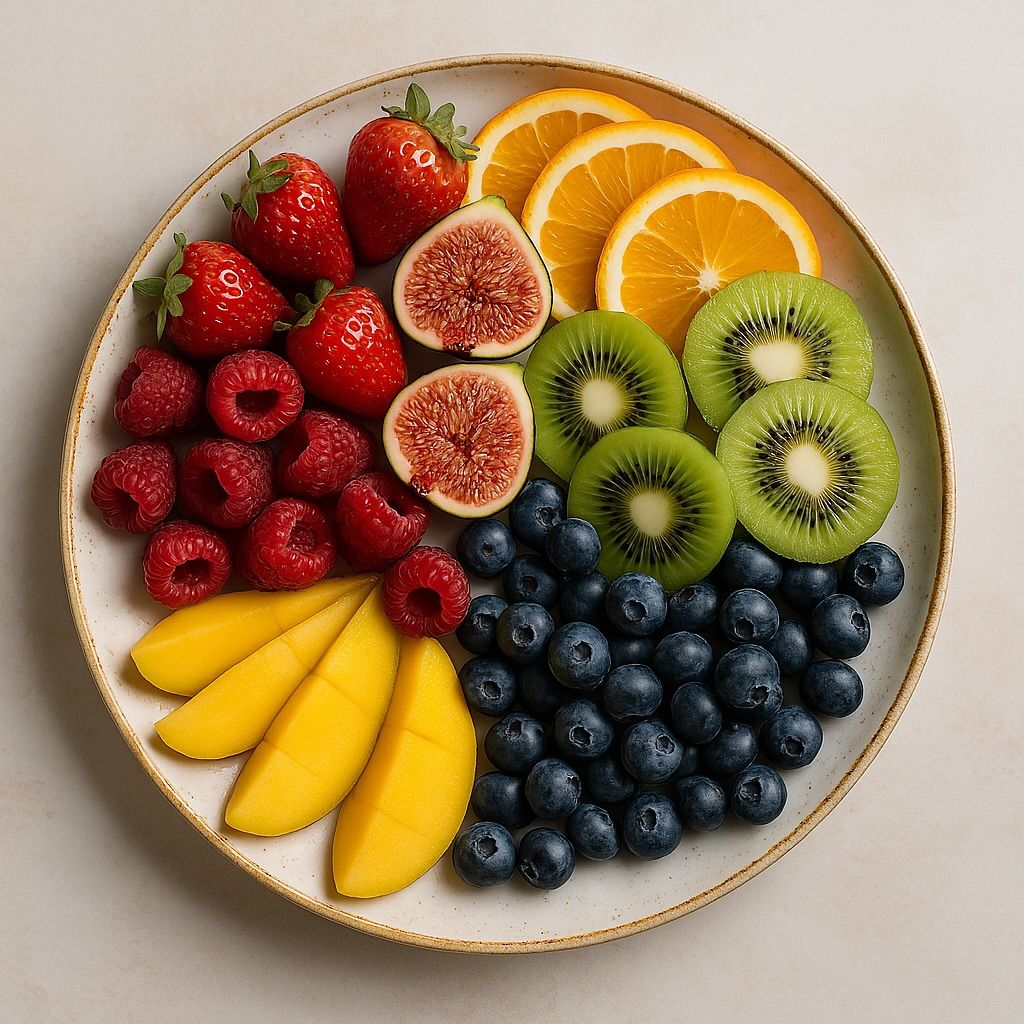
The Color Code: Eat the Rainbow

fruits


Each color found in your fruits and vegetables signifies a unique array of nutrients and antioxidants.


1-Red foods (such as tomatoes, strawberries, and watermelon) promote heart health.


2-Orange and yellow foods (including carrots, mangoes, and sweet potatoes) enhance your immune system.


3-Green foods (like spinach, broccoli, and kale) are abundant in iron, calcium, and fiber.


4-Blue and purple foods (for example, blueberries, eggplant, and grapes) assist in safeguarding your cells from damage.


Aim to fill half your plate with vibrant produce at every meal — your body will appreciate it!